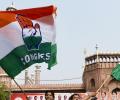
A controversy has erupted over the alleged misrepresentation of the India map on the posters displayed by the Congress to commemorate the centenary of 1924 Congress session in Karnataka's Belagavi, with the Bharatiya Janata Party dubbing it as 'vote bank' politics by the national party.

The usual rush of devotees was missing this year, presumably due to the Pahalgam terror attack and the military action between India and Pakistan following it.
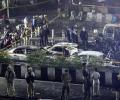
'The elimination of terrorists does not imply the neutralisation of terrorism. That terrorist ecosystem continues to thrive in Kashmir.'
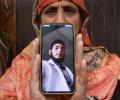
Ten days after the devastating car explosion near the Red Fort, in which 13 people lost their lives and several others were injured, investigators say the incident is part of a broader terror conspiracy involving a professional network of radicalised individuals based in Faridabad, Saharanpur and Kashmir.

A top police officer in Jammu says that the presence of foreign terrorists in the region's dense forests is a major challenge, and that efforts are underway to neutralize them. He also noted the use of technology like drones by terrorists and criminals.
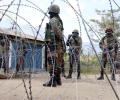
The Armed Forces (Special Powers) Act (AFSPA) has been extended for six months in parts of Manipur, Nagaland, and Arunachal Pradesh due to the prevailing law and order situation.
A major breakthrough has been achieved in the Red Fort car blast case, with intelligence agencies uncovering a Rs 20 lakh fund trail linked to three doctors, Umar, Muzammil, and Shaheen.
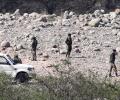
Four recent encounters in Jammu and Kashmir's Kathua district have exposed the route used by terrorists to infiltrate into India from across the International Border (IB), a senior police officer said. The successful recovery of huge quantities of arms and ammunition, including explosives, after the gunfights has scuttled a major plan of the terror groups to carry out a major strike in Jammu and Kashmir.

This is the first ever incident of fratricide in the Kashmir police department.

Hours before the blast in Delhi, eight people, including three doctors, were arrested and 2,900 kg of explosives were seized with the uncovering of a "white collar" terror module on Monday.
The dastardly dimensions of the attack are gradually sinking in even as the Government of India announced its immediate diplomatic and other retaliatory measures. It is generally expected to be followed up with punitive military action across the LoC, sooner than later, observes Mohammad Sayeed Malik, the distinguished commentator on Kashmir affairs.
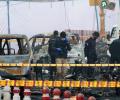
According to sources, a man named Tariq from Pulwama, Jammu and Kashmir, who has been arrested, is said to have given the Hyundai i20 car to Umar Mohammad.

Pakistan-based terror groups Jaish-e-Mohammed (JeM) and Hizbul Mujahideen (HM) have begun relocating their bases to Khyber Pakhtunkhwa (KPK) province from Pakistan-Occupied Kashmir in the wake of India's Operation Sindoor, sources said.
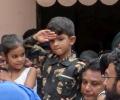
Kabir, the son of Col Manpreet Singh, who was killed fighting terrorists in Kashmir, believes his father will return home after receiving the Kirti Chakra. The 10-year-old boy, who lit his father's pyre 19 months ago, clings to the hope that his father is alive and well, despite the reality of his death.

'You cannot 'clear' your way to peace.' 'You need intelligence, calibrated force, impartial law enforcement, political neutrality, humanitarian returns and a sustained reconciliation plan.'

The police sounded a high alert in Delhi. Seven fire tenders were rushed to the spot with police cordoning off the area, the Delhi Fire Services said.
In May, 40 Rohingyas were blindfolded and flown to the Andaman and Nicobar islands and then thrown into the sea and made to swim to an island in Myanmar. And after the Pahalgam attack, at least 300 Muslims were 'pushed back' to Bangladesh from Assam.

Security agencies in Jammu and Kashmir are facing a new threat from 'bedroom jihadis' who use social media to spread misinformation and incite communal discord. These individuals, operating from their homes, are part of a sophisticated cross-border effort to destabilize the region by disseminating inflammatory content and propaganda.
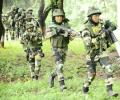
Among the medal winners are a deputy commandant rank officer, two assistant commandants and an inspector.
'Why have we failed to address the issue of ensuring a requisite buffer zone in J&K, given that cross-border links of some J&K politicians are known?', asks Lieutenant General Prakash Katoch (retd).

Over 75 government employees with terror links have been dismissed so far by the LG administration.

Punjab Police arrested three men from Jammu and Kashmir, uncovering a Jaish-e-Mohammad (JeM) linked terror module in connection with the murder of a cab driver. The accused confessed to the crime and the victim's body and the weapon used were recovered.

The State Investigation Agency (SIA) conducted raids in central Kashmir as part of its investigation into the 35-year-old murder of Sarla Bhat, a Kashmiri Pandit woman. The raids targeted individuals formerly associated with the banned Jammu and Kashmir Liberation Front (JKLF).

The action was carried out in connection with a case registered under various sections of Indian Arms Act, and Unlawful Activities (Prevention) Act, he said.
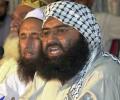
In a viral video uploaded to a YouTube channel on Tuesday, JeM commander Ilyas Kashmiri can be heard fuming over the Indian attack that killed the family members of Azhar and also bragging about fighting in neighbouring countries for Pakistan.

'Political protection allow groups to recruit, rearm and operate with reduced operational pressure. That increases their bargaining power and their ability to destabilise.'
Stakeholders said the industry was first hit by widespread cancellations after the April 22 Pahalgam terror attack in Jammu and Kashmir, and the fresh disturbances have further dented travellers' confidence.

The Leh Apex Body (LAB) is demanding a judicial probe into the recent violence in Leh, which resulted in four deaths and numerous injuries. The LAB co-chairman, Chering Dorjay, denies any foreign involvement and alleges excessive force by police and CRPF personnel.

The terrorists were intercepted near Tawi Bridge when they were travelling in a truck to Kashmir.

The Indian Army's para commandos killed the alleged mastermind of the Pahalgam terror attack, along with two associates, in an encounter near Srinagar.
Terrorists attacked a police picket in south Kashmir's Medura village in Pulwama district on Tuesday night and decamped with arms and ammunition after overpowering the police guards in the post.

Jain currently heads RAW's Aviation Research Centre (ARC), which deals with aerial surveillance, among others.
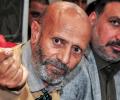
The Delhi High Court granted two-day custody parole to jailed J&K MP Abdul Rashid Sheikh, allowing him to attend the ongoing Parliament session. The court imposed certain restrictions on Rashid, including a ban on using a cellphone or addressing the media, and ordered that he be escorted by armed police personnel to and from the Lok Sabha. The decision came after a legal battle between the National Investigation Agency (NIA), which argued against the parole, and Rashid's lawyers, who highlighted the importance of his representation in Parliament during the budget session. Rashid's case is linked to funding separatist activities in Jammu and Kashmir and connections to designated terrorist Hafeez Saeed.

The National Investigation Agency (NIA) on Monday said that it has gathered a substantial body of evidence regarding identities of the terrorists involved in Pahalgam terror attack.
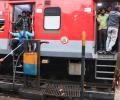
A controversy erupted after a train with dilapidated and dirty coaches was provided to ferry Border Security Force (BSF) personnel from Tripura for deployment during the Amarnath Yatra in Kashmir, with Railway Minister Ashwini Vaishnaw suspending four officials and ordering an inquiry.
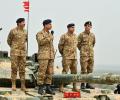
JeM commander Ilyas Kashmiri also said that the Pakistan Army and the jihadis have become one after 25 years of his outfit's struggle.
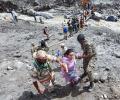
Glimpses from India and around the world that will make you smile and cry.
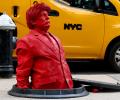
Glimpses from around the world that will make you smile and cry.
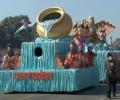
The best marching contingent among the Central Armed Police Forces (CAPFs) and other auxiliary forces was the Delhi Police team.
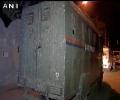
The bus carrying personnel of the Jammu and Kashmir Armed Police came under fire from the terrorists in the evening. The vehicle was going from Bemina to Zewan, a police official said.
